


Most packaging mistakes are not design mistakes. They are conversation mistakes, something nobody asked about before the purchase order went out. The right Custom Packaging Questions surface those gaps while you can still change course, instead of when a pallet arrives and the boxes are half an inch too narrow for your product.
This guide covers what to ask, why each answer matters, and what a weak answer actually sounds like so you can spot one in real time.
Why Asking Questions Matters More Than You Think
Custom packaging is a manufactured product, not a catalog item. Nothing exists until you approve it, which means every assumption you carry into the conversation gets built into a physical run of several thousand units. So, these Custom Packaging Questions are very helpful for this. You must also ask the packaging manufacturer to follow the FDA food packaging laws in the USA when placing an order for custom food packaging.
Three things make that risky in a way that ordinary purchasing is not.
- There is no returning it. A branded box with your logo on it has no resale value to anyone else. If the specification is wrong, the entire run is scrap. A supplier cannot restock it, so the financial exposure sits entirely with you.
- Quotes hide their variables. Two quotes for “1,000 custom mailer boxes” can differ by 40%, and both be honest, because they are quoting different board weights, different print methods, and different shipping terms. Comparing the numbers without comparing the specifications tells you almost nothing.
- Small errors scale. A quarter-inch sizing error is invisible on a sample and catastrophic across ten thousand units. Volume is what turns a minor oversight into a write-off.
Asking upfront costs you one conversation. Not asking can cost you a full production run.
The Top Custom Packaging Questions to Ask Any Supplier
These are grouped by what they protect: your specification, your budget, your timeline, and your position if something goes wrong.
Questions About Specification and Fit to Standards
1. What board options do you recommend for my specific product, and why?
Notice this is not “what materials do you offer.” Anyone can list kraft, cardboard, corrugated, chipboard, and rigid. What you want is a recommendation tied to your product’s weight, fragility, and shipping distance.
Weak answer: a list of every material available.
Strong answer: “For a 2 lb ceramic item shipping cross-country, I’d go with corrugated over cardboard; here’s the trade-off in cost.”
The right board also depends on the format. A Custom Mailer Box heading through a courier network needs different rigidity than a Custom Bakery Box traveling six blocks.
2. Are you sizing to my product’s dimensions or to the box’s internal dimensions?
This distinction causes more fit problems than any other single issue. Internal dimensions account for board thickness; external dimensions do not. On a rigid box or a double-wall corrugated build, that difference is significant enough to prevent your product from going in.
Always confirm which measurement the quote is based on, and give your product dimensions rather than a guessed box size. This matters most on rigid builds, on Custom Rigid Boxes and Custom Gift Boxes; wall thickness eats noticeably more internal space than it does on a folding carton.
3. Will you send a physical sample before full production?
A digital proof and a 3D mockup show you the color and layout. They do not show you whether the board feels cheap in hand, whether the closure holds, or whether your product actually fits.
For food packaging, especially, only a physical sample tells you whether grease will come through. That applies equally to board and to paper. Custom Greaseproof Paper and Custom Butcher Paper both behave differently with real food than they do on a spec sheet.
Ask whether samples are free, what they cost if not, and how long they add to the timeline.
4. How will my brand colors reproduce on this material?
Kraft board absorbs ink and shifts color noticeably. The same Pantone reference prints differently on coated cardboard than on uncoated kraft. If color accuracy matters to your brand, ask specifically whether they can Pantone match on your chosen substrate, and whether that carries an extra cost.
This is why brands ordering across formats usually approve color on one substrate first, then extend that profile to Custom Stickers and Labels and Custom Sleeves rather than signing off on each one separately.
Questions About Cost and Order Size
5. What is the actual minimum order quantity?
Suppliers frequently advertise low or no minimums, then apply one at the quoting stage for anything involving custom die-cutting or specialty coating. Ask for the minimum on your exact specification, not the general policy.
At Custom Boxes Options, there is no minimum on standard specifications, and where a complex build does carry one, we state the number before you commit rather than after.
6. What is the total landed cost, including setup, tooling, and shipping?
This is the single most important question on this list. A per-unit price is not a price. Ask for the all-in figure covering:
- The Die and plate setup charges
- Design fees, if any
- Sample costs
- Shipping to your address
- Any surcharge for rush production
A supplier quoting a low unit price and adding setup and freight later can easily end up more expensive than one quoting a higher upfront
7. Where do the price breaks fall?
Packaging pricing drops in steps, not smoothly. The gap between 500 and 1,000 units is often far smaller than you’d expect because setup costs are spread across more units. Ask where the next break sits; sometimes ordering 30% more costs 5% more.
Breaks also fall differently by product type. High-volume consumables like Custom Papers reach meaningful breaks far sooner than low-volume rigid builds.
8. What happens to the price on reorder?
Your first run pays for tooling. Your second should not. Confirm that repeat orders using the same die are quoted lower, and ask how long the tooling is retained.
Questions About Timeline
9. Does your stated turnaround start from order or from design approval?
This is a common misunderstanding that costs launches. A “7-day turnaround” usually means seven days after you approve the final artwork, and approval can take a week on its own if there are revision rounds.
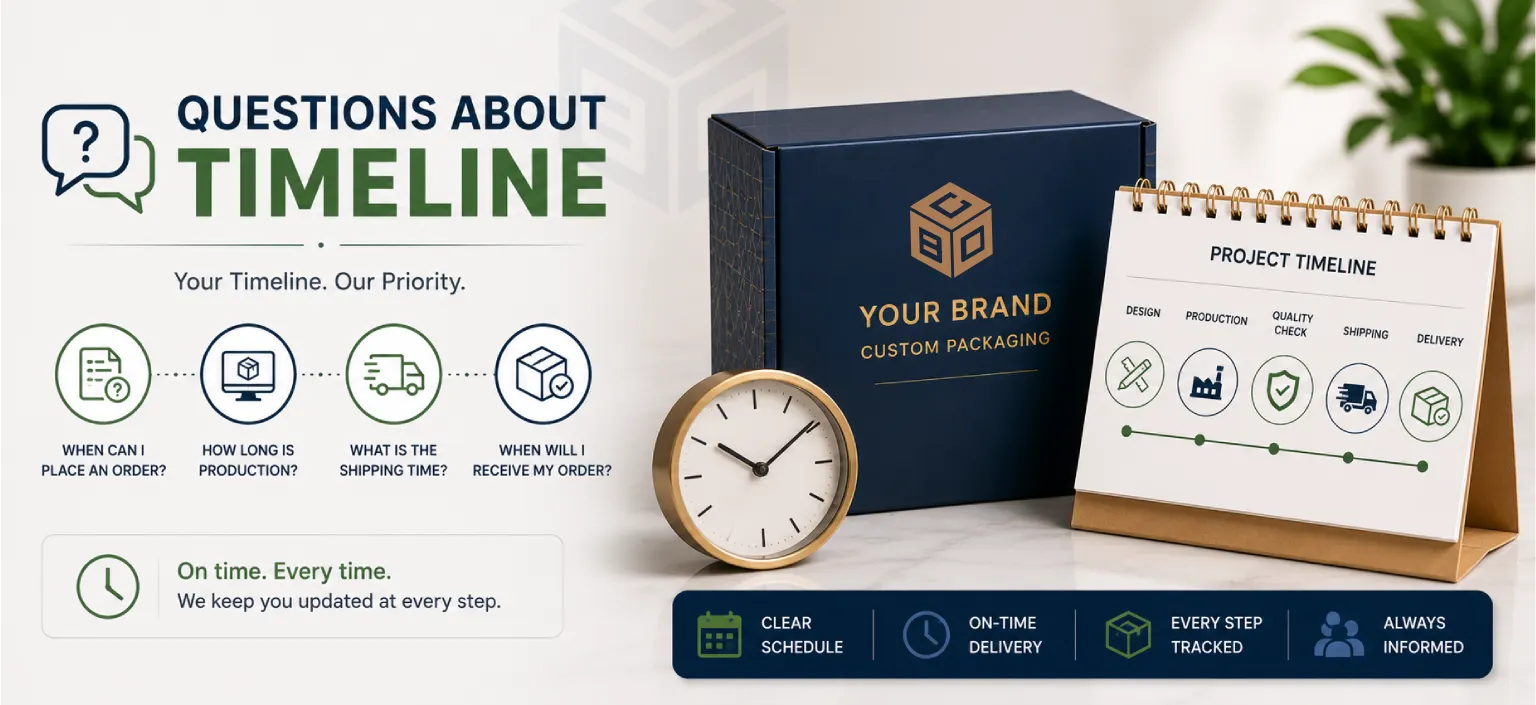
Our production runs 6 to 8 business days from approval, and we say so explicitly rather than letting the clock ambiguity work in our favor.
10. How many revision rounds are included before production?
Ask whether design revisions are unlimited, capped, or billed. Then ask how long each round takes, because three rounds at two days each add a week nobody planned for.
11. Can you meet my hard deadline, and what would it take?
If you have a real date, a product launch, a trade show, or a seasonal window, state it at the quoting stage rather than after. A supplier who says yes without asking about your artwork status has not actually assessed the timeline.
Questions About What Happens If Something Goes Wrong
12. Who owns the die once it’s paid for?
Custom dies are physical tooling. Some suppliers treat them as their property even after you’ve covered the setup cost, which makes moving to another manufacturer expensive. Ask directly whether you own it and whether it can be released or transferred.
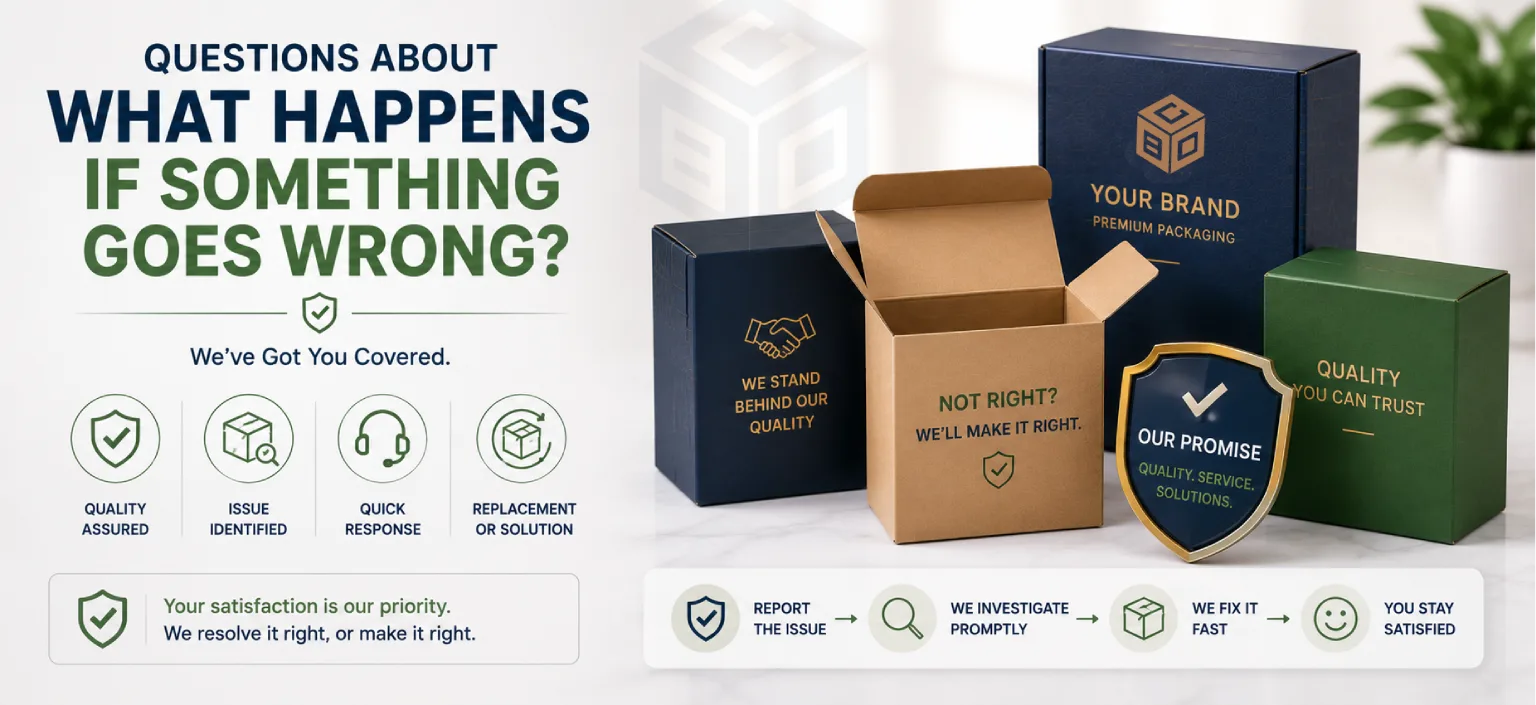
13. What is your policy if the delivered order doesn’t match the approved proof?
You want a specific answer: a reprint window, a defined inspection period, and a stated remedy. Vague reassurance about customer satisfaction is not a policy.
Our standard is a 7-day inspection window from delivery, with replacement or compensation if the order doesn’t match what you approved.
14. How do you keep color and quality consistent across reorders?
Batch drift is real. Boxes printed six months apart can differ visibly if the supplier doesn’t retain color profiles and press settings. Ask whether they keep your specification on file and whether they check new runs against the original approved sample.
Drift shows up fastest when suppliers are split: one printing your Custom Food Packaging, another printing your labels. Two close-but-not-matching versions of your brand color are a problem customers notice even when they can’t name it.
Final Buying Tips Before You Place the Order
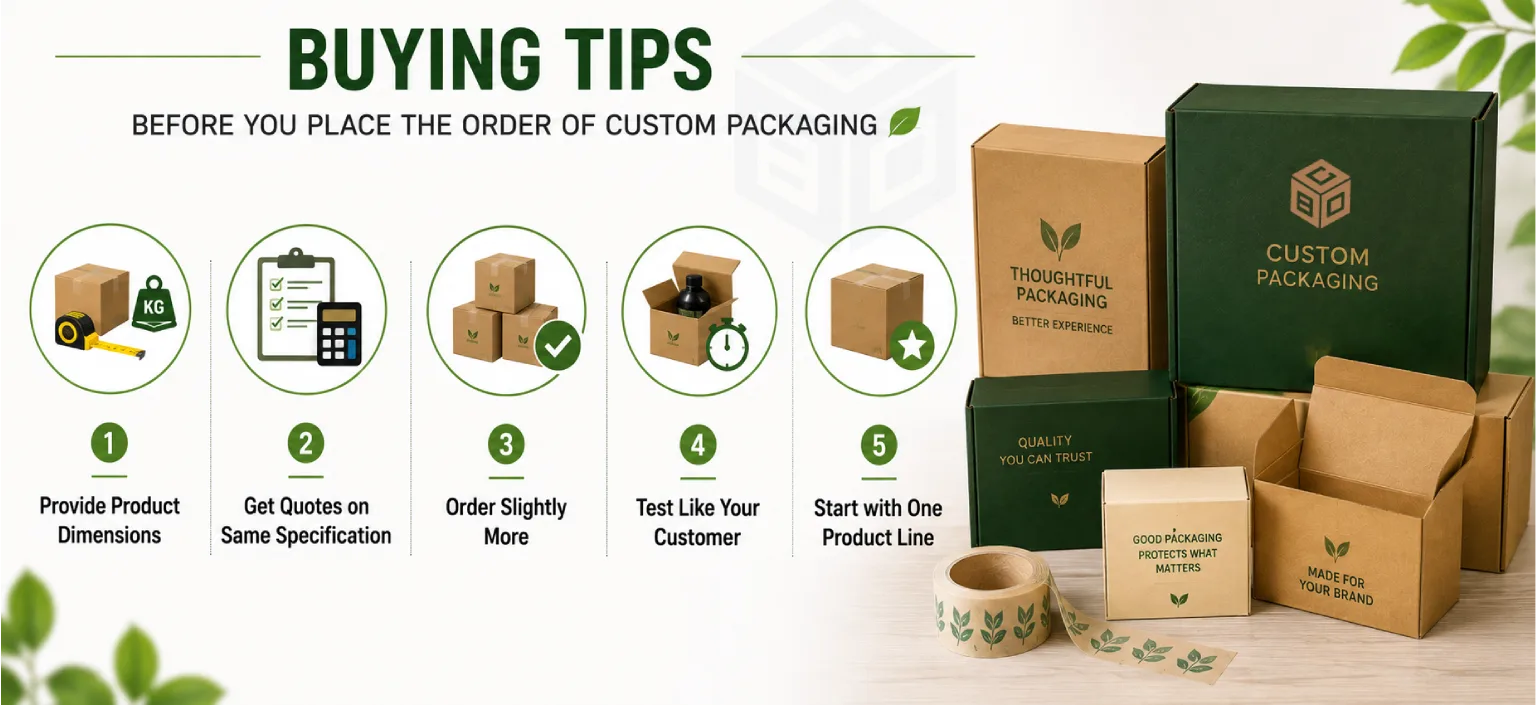
- Send your product dimensions, not your guessed box size. Give the length, width, and height of the item itself, plus its weight and any fragility notes. Let the manufacturer calculate the box. This one habit prevents the majority of fitness failures.
- Get every quote on the same specification. Fix the board, the print method, the finish, and the quantity, then request quotes. Otherwise, you are comparing numbers that describe different products.
- Order slightly more than you need on the first run. Setup cost is already paid, so marginal units are cheap. Running out mid-season and reordering in small quantities is the expensive outcome.
- Test the sample the way your customer will. Put your actual product inside and leave it as long as a delivery would take. Grease bleed, moisture, and structural sag show up over time, not on inspection.
- Start with one product line, not your whole range. Get the specification right on a single high-volume item, then extend the same board and print treatment across the rest. It’s cheaper to correct one mistake than five.
Working with an experienced packaging and printing company should feel like the Custom Packaging Questions get answered before you even think to ask them. If you’re getting vague responses at the quoting stage, that’s information about how the rest of the process will go. Ready to start? Share your product dimensions, quantity, and deadline, and we’ll come back with a full specification, board, print, finish, and landed cost, plus a free 3D mockup before anything goes to production.