
Free Shipping
14-Days Returns
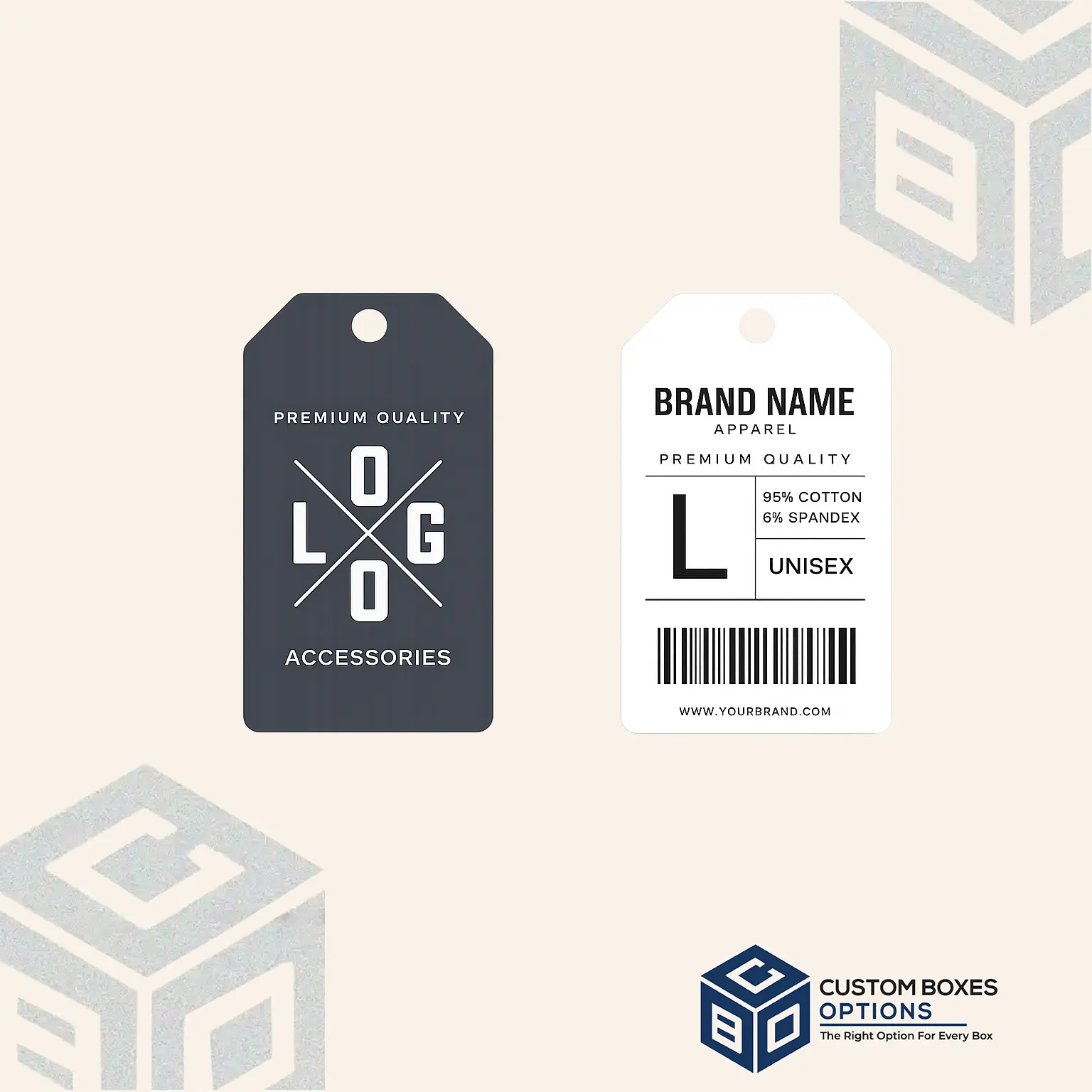
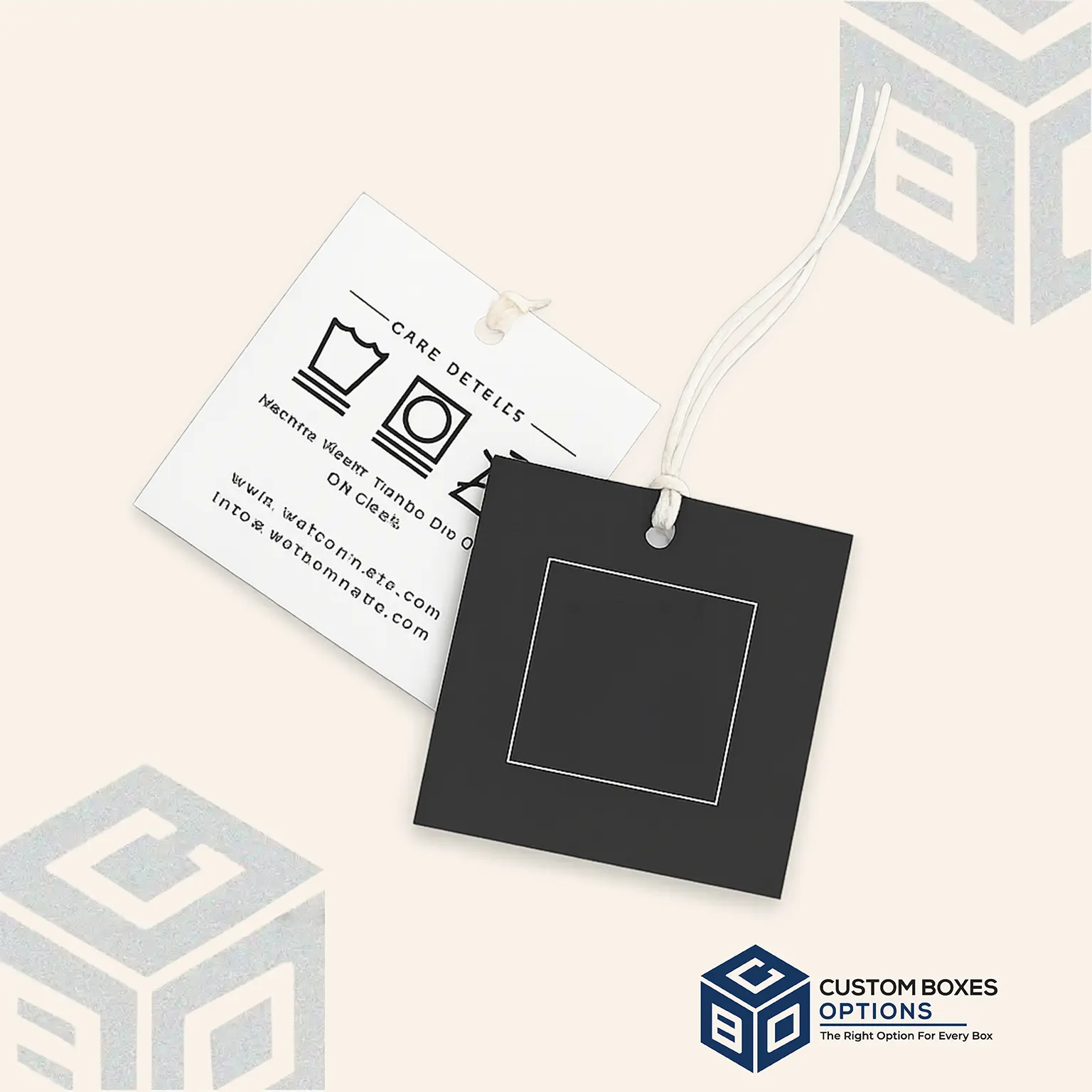
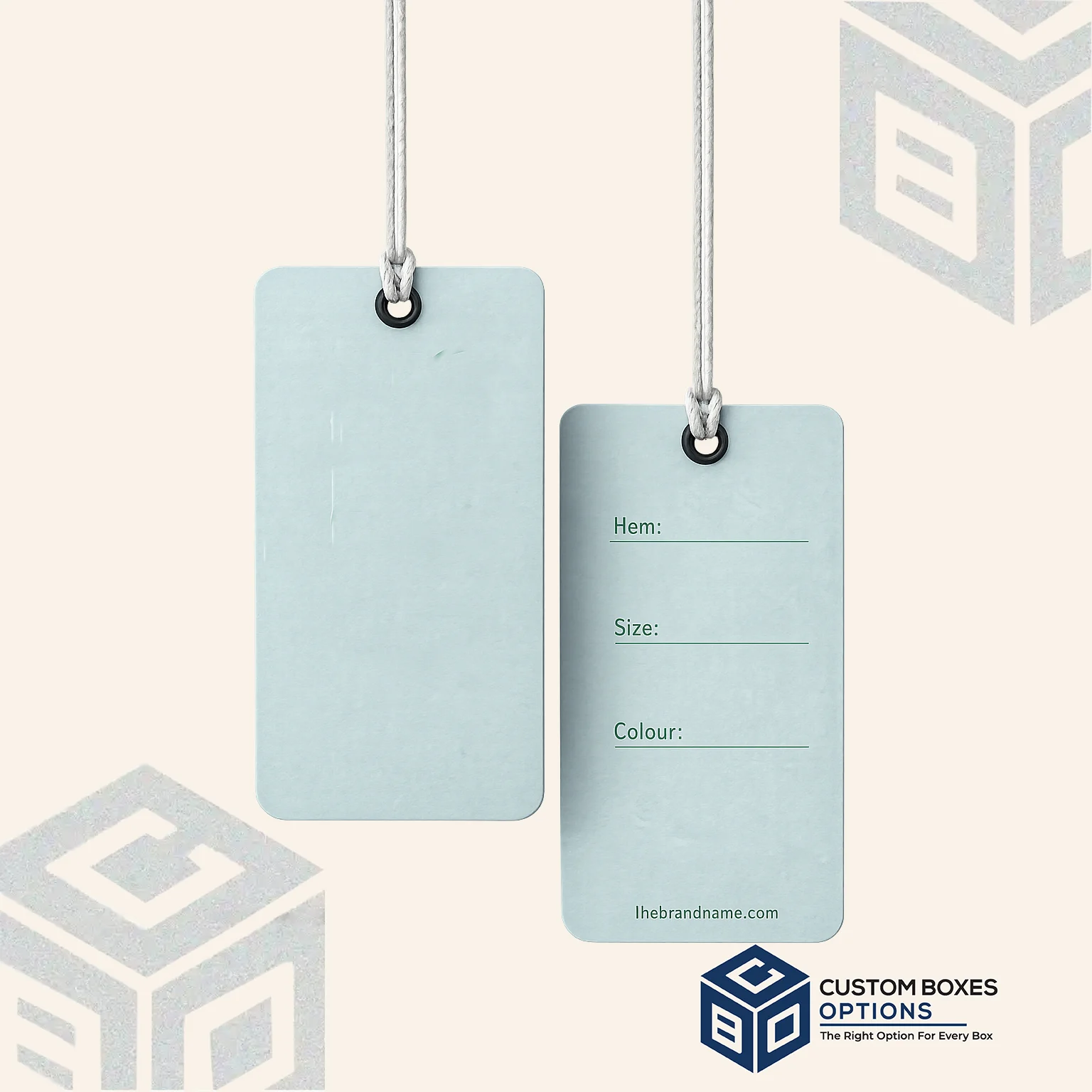
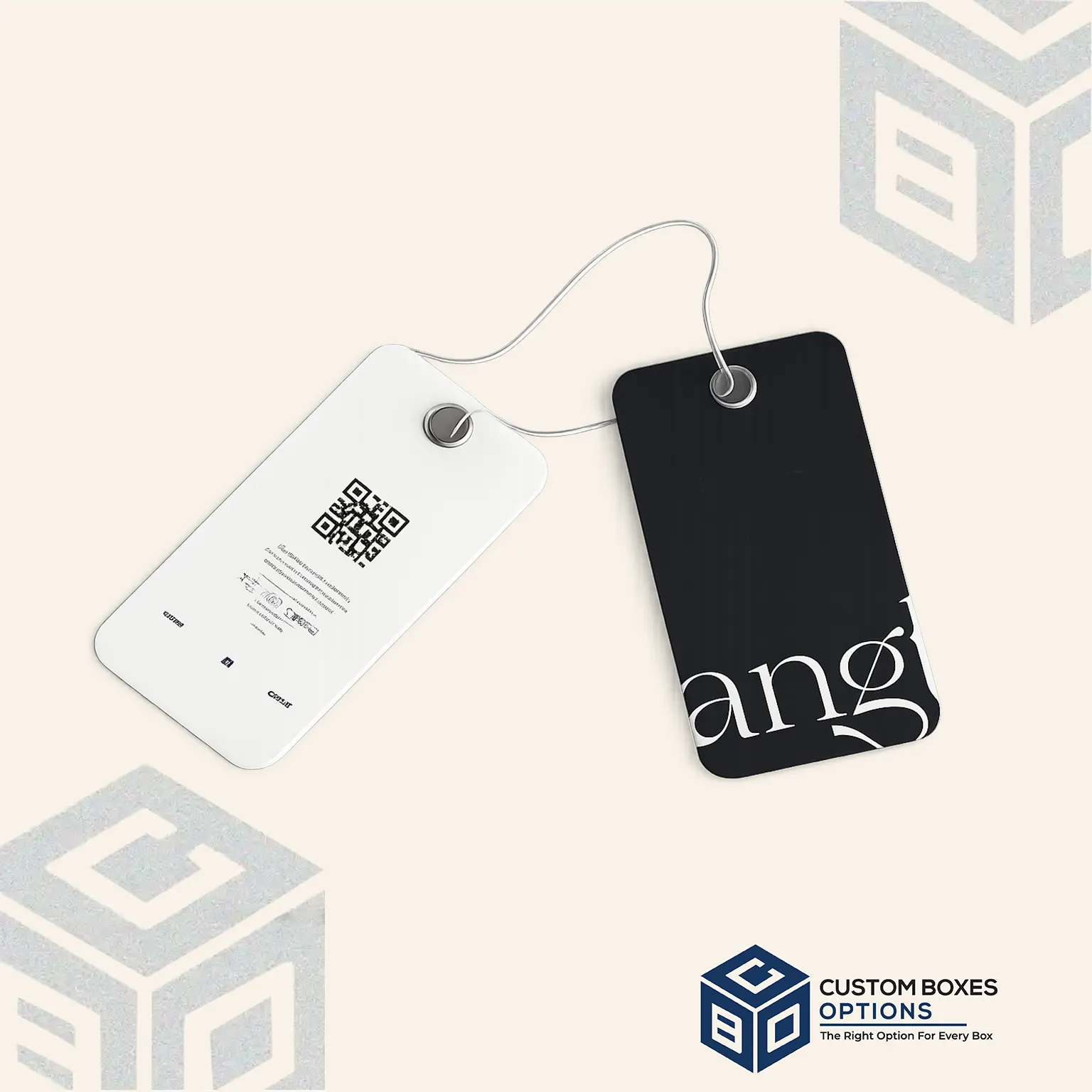
Clothing Hang Tags carry more than a logo and a price. Fiber content, sizing, care guidance, and country of origin all compete for one small surface, and apparel brands routinely discover at the proof stage that the copy will not fit legibly. We size tags around the full requirement first, then design into the space that is left. Board runs 14pt to 18pt for rail durability, with eyelet reinforcement, foil, and soft-touch finishing, and pre-strung supply in cotton, elastic, or barb fastener. Our apparel packaging supplier team reviews your copy volume before your first run.
Free Shipping
Free Design Support
Starting from:
$1.00 Original price was: $1.00.$0.50Current price is: $0.50.
In Stock
Across our printed hang tag range, apparel is the format under the most pressure. Clothing Hang Tags have to carry a brand mark, a price, a size, and often fiber content, all on a surface a few inches across, hanging from a garment on a crowded rail.
Most suppliers design for the logo and discover the rest at the proof stage. We size the copy first.
This is the distinction apparel brands most often get wrong.
Care instructions fall under the FTC’s Care Labeling Rule, which requires them on a permanent label attached to the garment. A hang tag comes off at purchase, so it cannot satisfy that requirement. Printing care guidance on the tag as a service to the shopper is fine — but it is a duplicate, not a substitute.
Fiber content, country of origin, and manufacturer identity or RN number fall under the Textile Fiber Products Identification Act, where standard practice is a securely attached label that stays with the garment until sale.
The practical consequence: your hang tag is a sales surface first and a compliance surface second. One honest limit: we are a printer, not a compliance advisor. We build the panel space and set the copy you supply, but the content and its placement should be reviewed by a textile labeling specialist before print.
Here is the cost problem nobody raises at the quoting stage.
A single style in XS through XXL is six SKUs. If the size prints on the tag, that means six sets of artwork and six inventory lines in the stockroom.
Three ways around it:
Which fits depends on your run length and how often your size curve changes. Decide before tooling, not after.
The tag stays the same. What holds it on should not.
Barb fasteners from a tagging gun are the fastest and cheapest, and they work well on wovens and seam allowances. They leave a visible hole in knitwear, silk, and fine jersey, exactly the damage that turns into a return.
For delicate fabrics, run cotton string or an elastic loop through a buttonhole, a belt loop, or the sewn-in care label rather than the fabric face.
On a packed rail, garments hang face-to-back, and your tag is seen edge-on or half-covered by the next garment. Only the top portion reliably shows.
Put the brand mark in the upper third and keep price and spec copy lower, where a shopper reads it after pulling the garment toward them. Since the reverse face does less work than the front, this is where folded hang tags earn their cost: inside panels carry the detail while the outside stays clean.
Rail handling is repetitive, and corners fray first, which is why rounded-corner hang tags are the default apparel shape and why an eyelet is worth specifying at any weight. 14pt to 18pt is the working range; premium lines justify heavier stock with foil stamping or an overall metallic finish.
One last practical note: leave clean space for a Markdown sticker. Apparel gets discounted, and edge-to-edge artwork forces store staff to cover your logo.
Ecommerce-first brands should plan the tag alongside the unboxing instead, since it is seen with the mailer and tissue rather than on a rail. Running all three through one branded print supplier keeps a single color reference across three very different substrates.
Request a free quote and physical samples for your Clothing Hang Tags, and we will confirm sizing against your copy before tooling.

Reviews
There are no reviews yet.