
Free Shipping
14-Days Returns
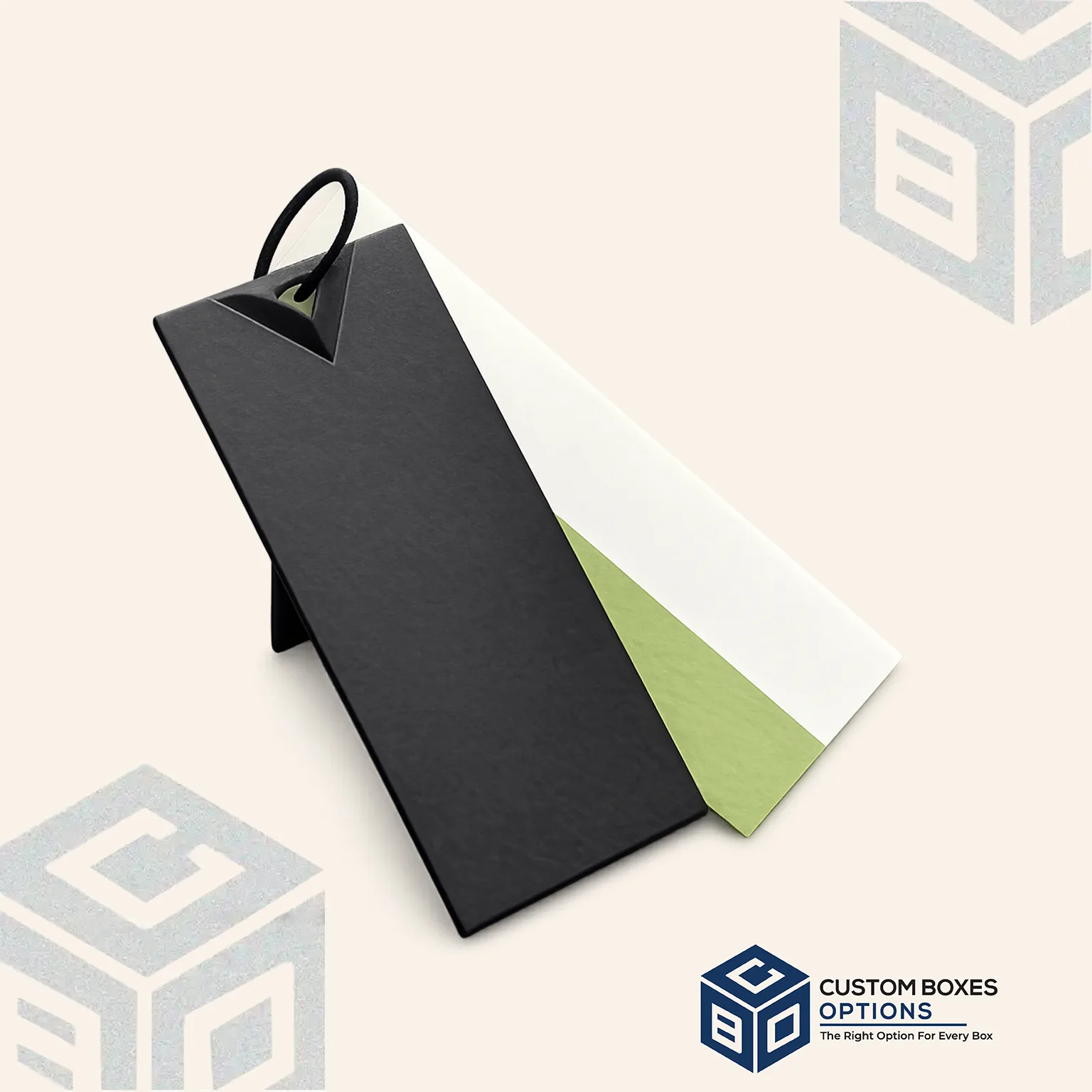
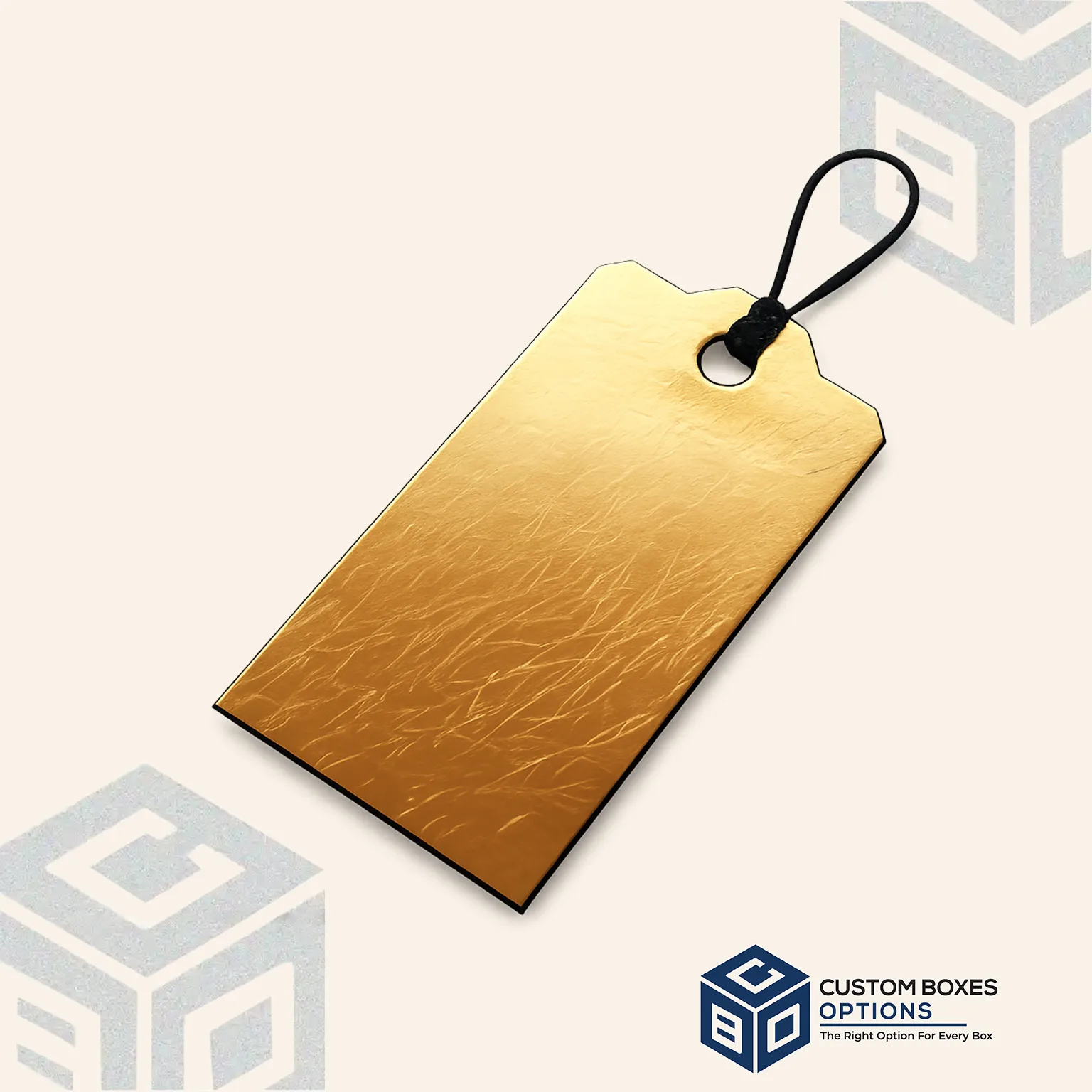
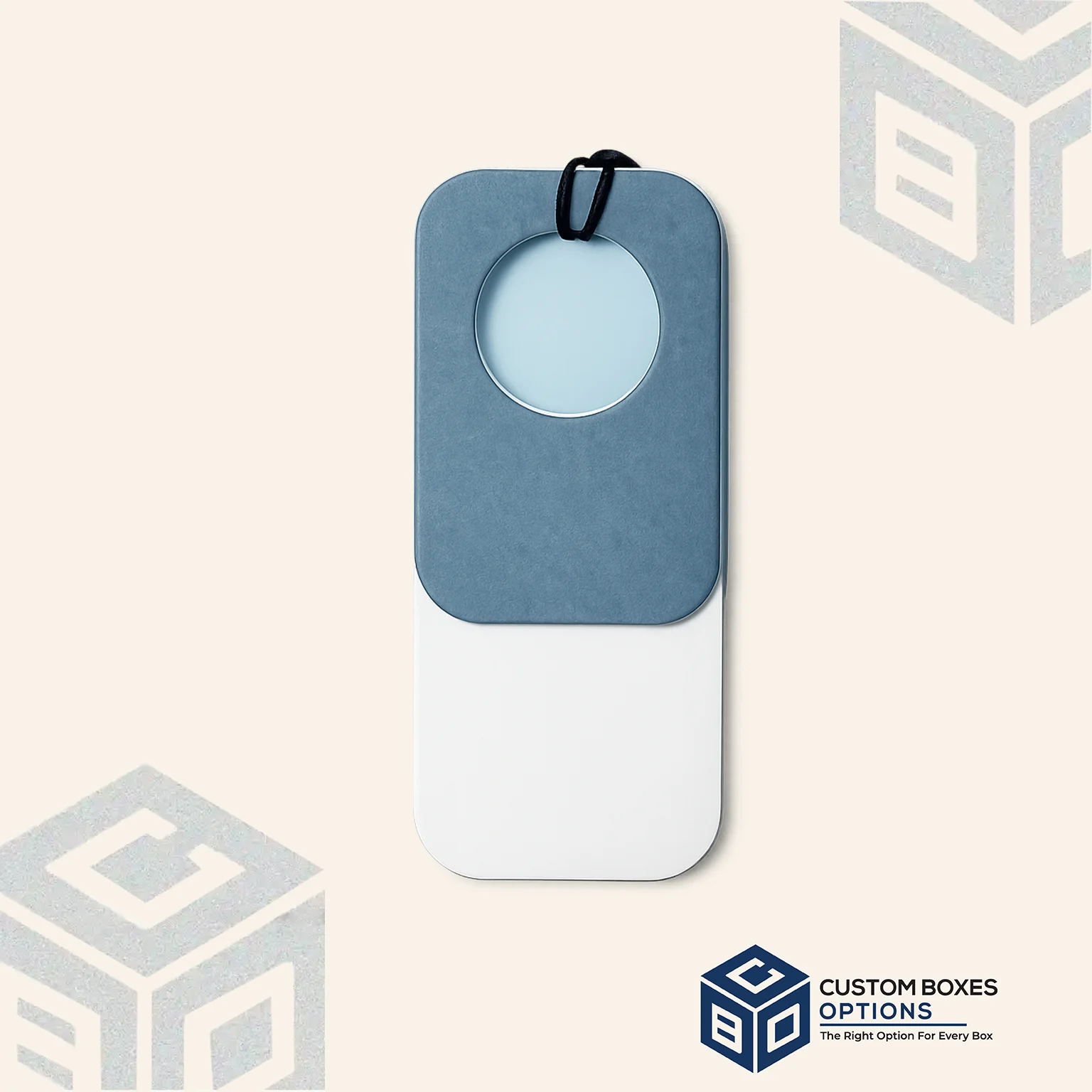
Foil Hang Tags work differently from printed metallics because the foil sits on top of the board rather than soaking into it. That opacity is the whole advantage: a gold stamp stays brilliant on kraft, on black, on any stock where metallic ink would go muddy. Hot stamping uses a heated die under pressure, so the effect reflects light rather than imitating it. We stamp in gold, silver, rose gold, copper, holographic, and matte pigment foils, on board from 14pt to 24pt with eyelet reinforcement. Our specialty print and finishing supplier team reviews artwork for minimum line weight before stamping.
Free Shipping
Free Design Support
Starting from:
$1.00 Original price was: $1.00.$0.50Current price is: $0.50.
In Stock
Foil Hang Tags are the only format in our custom hang tag range where the decoration is a separate material rather than a layer of ink. Metallic leaf transfers onto the board under heat and pressure, sitting on the surface instead of sinking into the fiber.
That mechanical difference explains every reason to choose foil and every limitation that comes with it.
Printed metallic ink is translucent. Whatever sits underneath shows through, which is why metallic ink on kraft reads brown-gold rather than gold, and why it disappears almost entirely on black.
Foil is opaque. A gold stamp on unbleached kraft is as bright as the same stamp on white, and against black stock the contrast is at its strongest. If your brand runs dark or natural-toned packaging, foil is not a preference; it is the only route to a true metallic.
That distinction is also the basis for choosing between this page and metallic hang tags, where sheen covers the whole surface at lower cost but without the same brilliance on a small detail.
Hot foil stamping needs its own tooling, separate from any cutting die. A magnesium or copper stamping die is engraved with your artwork, mounted, and heated.
A custom shape with foil detail therefore carries two tooling charges rather than one, worth raising at the quoting stage instead of discovering on the invoice. The amortization logic matches what we set out on our die-cut hang tags page: significant on a short first run, negligible across volume, and absent on a reorder using the same die.
Foil is less forgiving than ink, and artwork that prints beautifully can stamp poorly.
Very fine lines break up because a die cannot hold heat and pressure evenly across a hairline. Small serif type loses its thin strokes. Large solid fills bring the opposite problem: trapped air showing as pinholing across the area.
The reliable zone is bold, medium-weight artwork: a clean logo, a border rule, a short line of display type. We check line weights before engraving and come back with adjustments rather than stamping something that will look broken.
Foil needs full contact to transfer, so what it lands on matters more than board thickness.
Smooth uncoated stock delivers the sharpest result and the strongest contrast, since a matte surface makes the shine read brighter by comparison. Heavily textured, laid, or felt-finish board prevents even contact and produces a patchy stamp; sample it before committing. Soft-touch lamination under foil is one of the strongest pairings available at this size, though adhesion is worth checking on a physical proof first.
Foil is not limited to metallics. Rose gold and copper have become standard in beauty and lifestyle. Holographic foil shifts color with viewing angle. Matte foils give a muted metal look without high shine.
Pigment foils deliver flat opaque color, including white, which is the only dependable way to put solid white onto kraft or black board. Clear gloss foil creates a tone-on-tone effect, reading as texture rather than color.
A single die can also stamp and emboss simultaneously, raising the foiled area above the surface. It costs more than either alone but less than two separate passes, and it produces the strongest tactile result available on a tag. Worth considering for lines already using rigid presentation boxes.
Foil complicates recyclability. The metallic layer is not paper, and heavily foiled board is harder to process. Small stamped areas are generally tolerated in paper streams; full-coverage foil is not.
If sustainability messaging matters to your brand, keep coverage restrained, or use foil on the tag while leaving printed labels and outer packaging unfoiled. Sourcing both through one premium finishing manufacturer keeps the metallic tone consistent between stamped foil and printed gold.
Request a free quote and physical samples for your Foil Hang Tags, and we will review line weights before engraving the die.
Reviews
There are no reviews yet.