
Close

Free Shipping
14-Days Returns
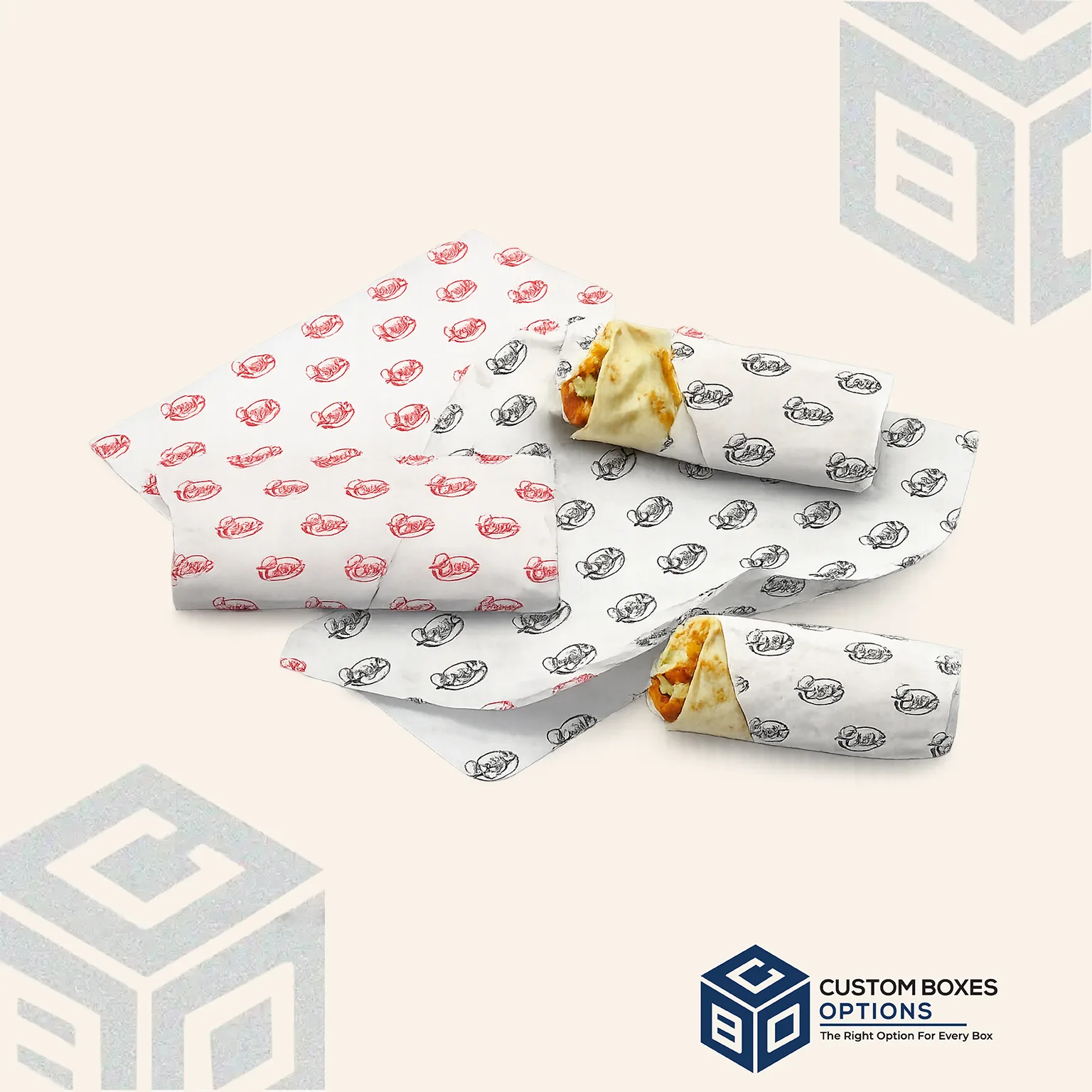
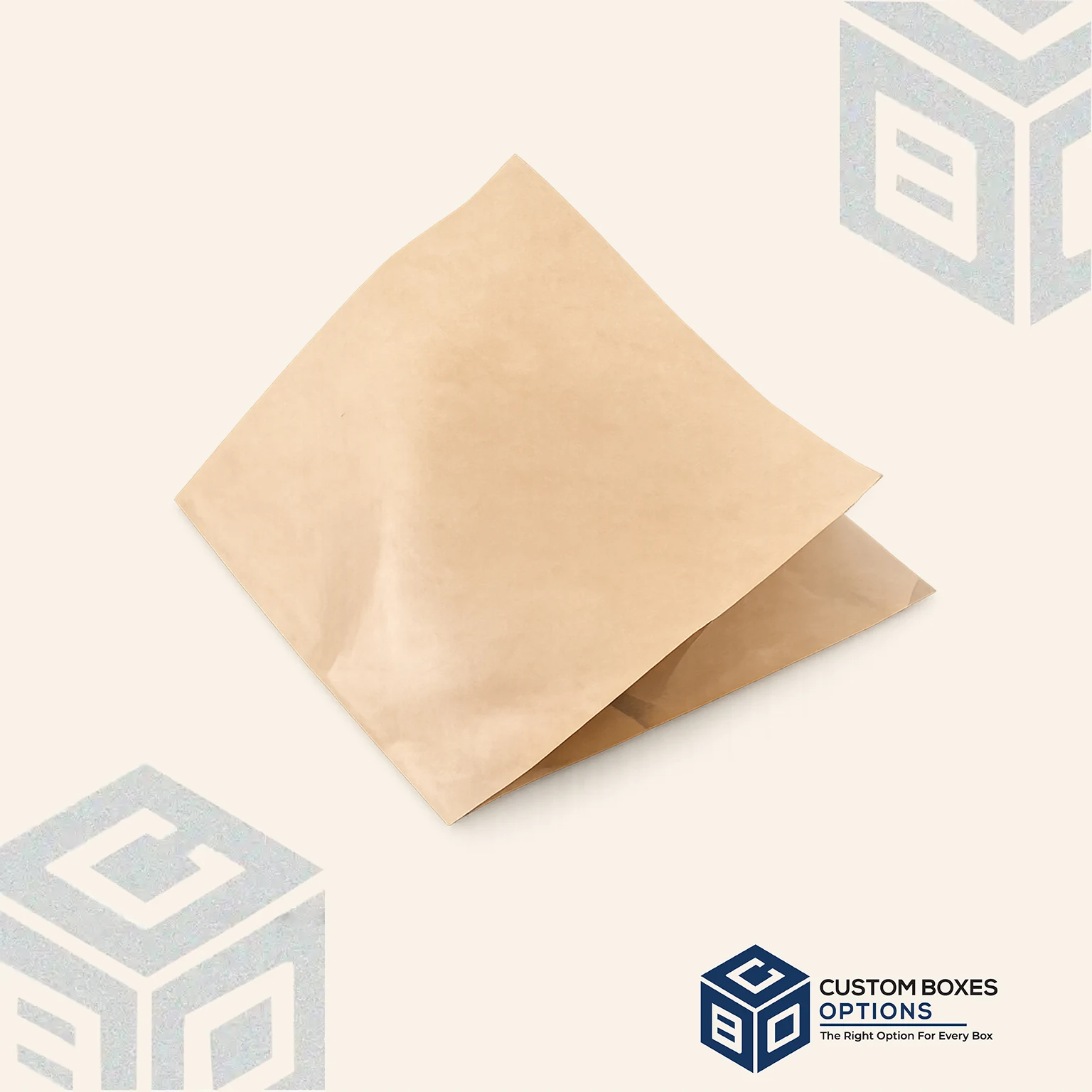
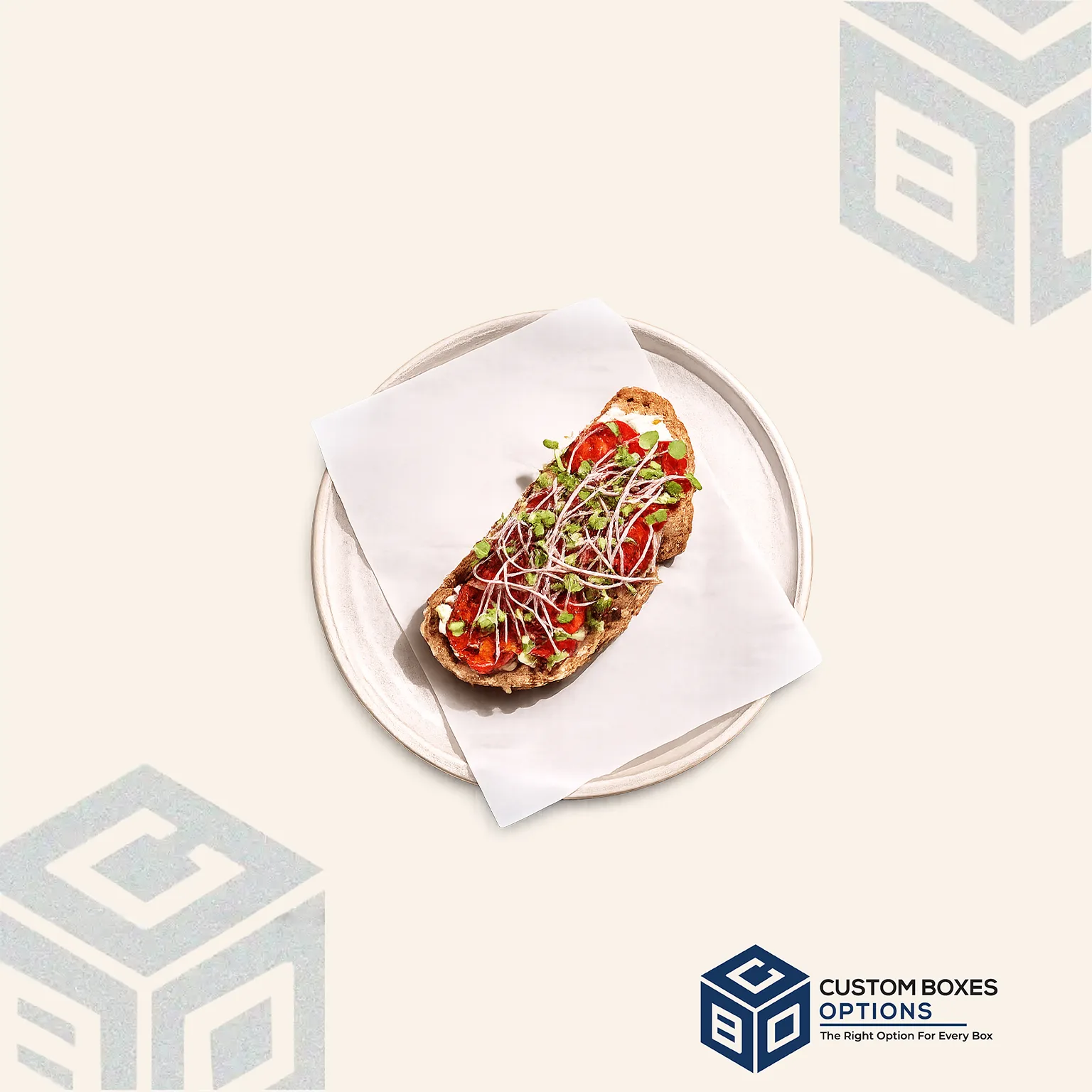
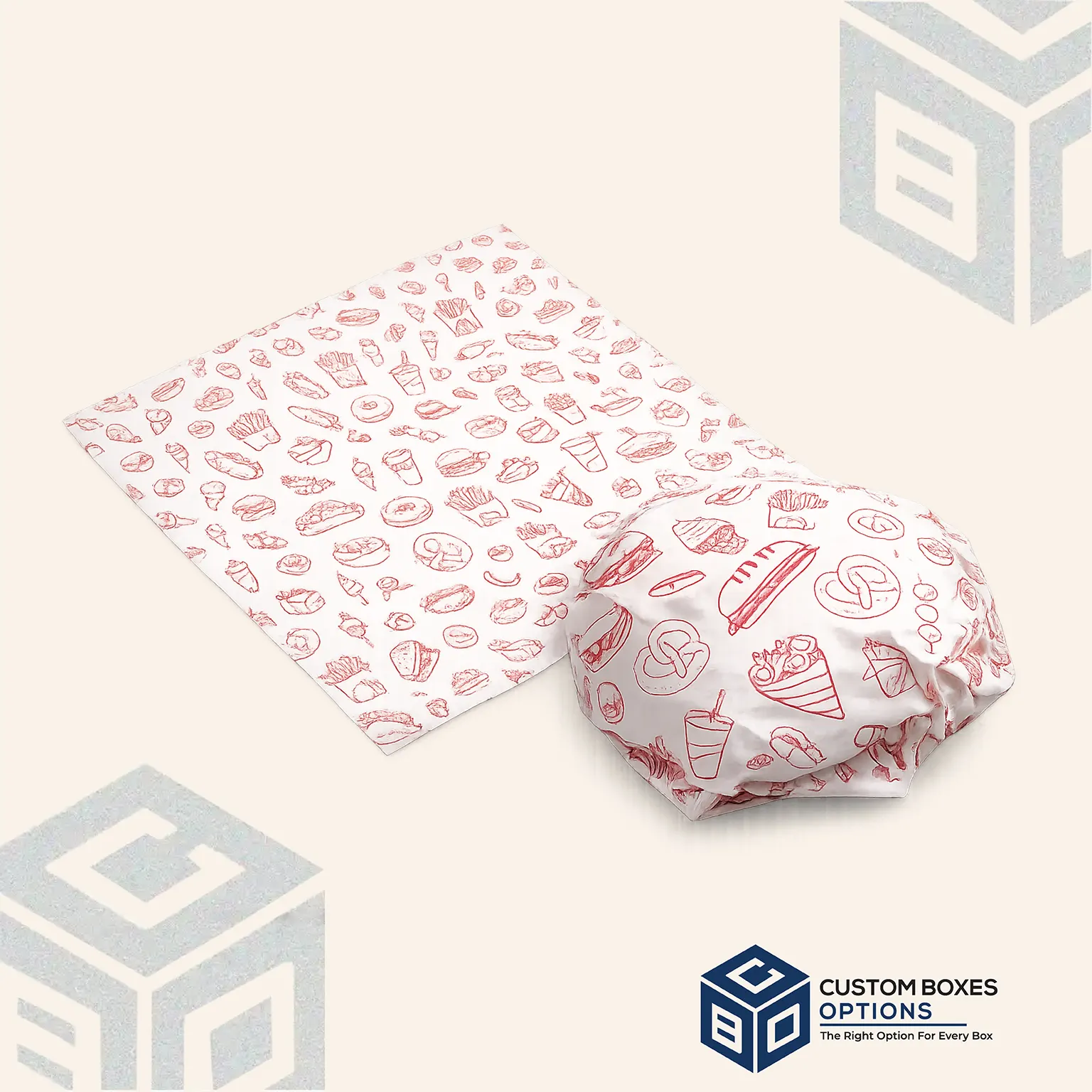
Custom Food Paper is a compliance category before it is a product category. Any sheet touching unwrapped food has to meet standards covering the base fiber, the coating, and the ink, and plenty of attractive paper on the market meets none of them. We supply grades certified for direct food contact across greaseproof, parchment, kraft, butcher, and deli applications, printed with water-based food-safe inks. Documentation is available for your records or health inspection file. Our branded packaging solutions team will match the grade to your menu and confirm compliance in writing. Request free physical samples before ordering.
Free Shipping
Free Design Support
Starting from:
$1.00 Original price was: $1.00.$0.50Current price is: $0.50.
In Stock
Within our custom papers range, food paper is less a single product than a compliance standard applied across several grades. The greaseproof, parchment, butcher, and deli sheets we supply are all Custom Food Paper when they meet the requirements below. Paper that fails them is simply paper, regardless of how it is marketed.
This page explains what those requirements actually are, because the distinction is poorly understood and occasionally expensive to get wrong.
Regulation treats these differently, and knowing which category you are in determines what you need to specify.
Direct contact means the paper touches unwrapped food, a sandwich wrap, a basket liner, or a cheese sheet. Every component of the paper is then subject to migration standards, since anything in the sheet can transfer into what people eat.
Indirect contact means the paper is separated from the food by another barrier, such as an outer wrap around a sealed item. Requirements are lighter, though not absent.
Most operators assume they are buying for direct contact and often are. The mistake runs the other way — buying an attractive indirect-grade paper and using it against food.
A compliant sheet has to clear all three. Anyone who fails disqualifies the whole product.
The base fiber must be produced under controlled conditions with approved processing aids. This is where recycled content becomes genuinely complicated, as covered below.
The coating: silicone, polyethylene, wax, PLA, or aqueous. Must be approved for the temperature range it will actually meet. A coating rated for chilled contact is not automatically safe against hot food.
The ink must be formulated for food contact, which rules out many standard commercial printing inks. We use water-based and soy-based inks throughout for exactly this reason.
This deserves plain speaking, because sustainability messaging and food safety can pull in opposite directions.
Recycled paper streams frequently contain newsprint and printed board. Those carry mineral oil residues from conventional printing inks, and those residues can migrate into food through paper. It is a documented concern that has driven regulatory attention internationally.
The result is that recycled content is often restricted or excluded in direct food contact grades. If sustainability is central to your brand, the better route is certified virgin fiber from responsibly managed forests or a compostable grade, both of which we supply. We would rather explain that trade-off than sell you a claim that does not hold.
The right food paper depends entirely on what it touches.
Oil and fried items need the silicone barrier in Custom Greaseproof Paper. Oven work requires the heat rating of Custom Parchment Paper. Fresh meat wants the breathability of Custom Butcher Paper, while cheese needs the two-ply humidity control of Custom Cheese Paper. Frozen storage calls for the poly barrier in Custom Freezer Paper, customer-facing wraps for Custom Sandwich Paper, and general wrapping for a food-grade Custom Kraft Paper.
Send us your menu rather than a paper name, and we will specify from the application backward.
A supplier claiming food-grade status should be able to produce evidence without hesitation. Ask for the compliance statement covering the specific grade, the coating approval, the ink certification, and FSC documentation where sustainable sourcing is part of your specification.
If a supplier treats that request as unusual, that response is itself informative. We provide documentation on request and keep it on file against your order.
Food operations rarely need one grade. Counters typically run several alongside board packaging, Custom Food Packaging for boxed items, and Custom Stickers and Labels for date and allergen marking.
Sourcing the set through one custom packaging manufacturer means a single compliance trail rather than chasing certificates across multiple vendors, which matters considerably during an inspection.
Request a free quote and physical samples for your Custom Food Paper, and we will confirm the grade and documentation against your menu first.

Reviews
There are no reviews yet.